
.jpg)
.jpg)
.jpg)
.jpg)
.jpg)
The reality is that transgender people have not merely been allies of LGBTQ culture; they have been its architects, its riot leaders, and its conscience. From the cobblestone streets of Greenwich Village to the ballrooms of Harlem, the fight for sexual orientation freedom and gender identity liberation have always been intertwined. To separate them is to erase half the story.
Younger generations (Gen Z) are leading a shift in understanding. For them, the transgender community is not a subset of LGBTQ culture; it is the vanguard . Many young people now view rigid sexual orientation labels as antiquated, adopting fluid terms like "pansexual" or "queer" that naturally align with a recognition of gender fluidity.
When a trans girl wears a dress for the first time, she is tapping into a courage that echoes the drag queens who fought police in 1969. When a trans man binds his chest, he is embodying the refusal to be defined by biology that defines the entire queer experience.
However, it is also important to acknowledge that the LGBTQ culture has not always been safe for the transgender community. Historically, some gay and lesbian organizations in the 1970s and 80s pushed trans people out, believing they were "too radical" or "made us look bad" to mainstream heterosexual society. Sylvia Rivera was literally booed off a stage at a gay rights rally in 1973. That trauma is not forgotten. It explains why the transgender community often operates with a dual consciousness: grateful for the larger umbrella, but wary of internal transphobia. Today, the transgender community sits at the intersection of soaring visibility and staggering violence. In terms of LGBTQ culture, trans figures are now leading the conversation. Shows like Pose (which featured the largest cast of trans actors in history), Disclosure on Netflix, and stars like Laverne Cox and Elliot Page have brought trans stories to the mainstream.
This legacy is vital. Early LGBTQ culture was a refuge for the "gender outlaws"—people whose very appearance defied societal norms. The gay liberation front of the 1970s was, in its purest form, a coalition of the sexually and gender deviant. For the transgender community, assimilation was never the immediate goal; liberation from the gender binary was. If you want to see the DNA of modern pop culture, you have to look at the underground Ballroom scene . Originating in Harlem in the 1920s and exploding in the 1980s (as documented in the seminal documentary Paris is Burning ), the Ballroom culture was a direct response to racism and homophobia in mainstream society—and transphobia even within gay spaces.
This article explores the historical symbiosis, the cultural contributions, the unique struggles, and the resilient future of the transgender community within the tapestry of LGBTQ culture. When we discuss the "birth" of the modern LGBTQ rights movement, we almost always point to the Stonewall Uprising of 1969. Yet, for decades, mainstream media attempted to whitewash the event, framing it as a protest led by cisgender gay men.
The truth is starkly different. The two most visible figures in throwing the first bricks and high-heeled shoes at the police were , a self-identified drag queen and trans woman, and Sylvia Rivera , a Latina trans woman.
.jpg)
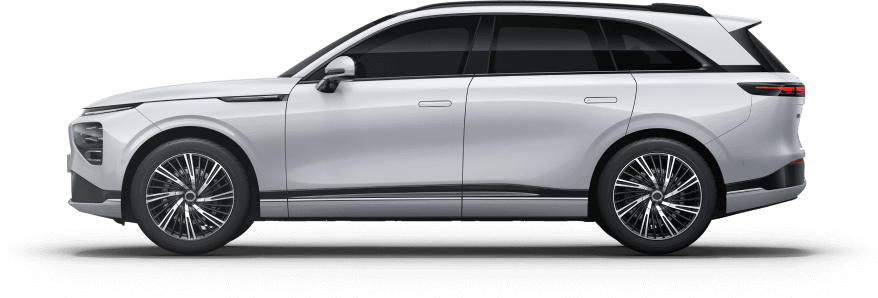
The BYD Xia DM-i 2025 adopts a design language similar to the Denza D9, featuring a full and wide front end with a "large-mouth" grille. The grille is adorned with numerous intermittent chrome trim pieces, resembling "fangs," which create a strong visual impact. The dragon-claw-shaped headlights on both sides are connected by a silver chrome trim panel, further enhancing the visual tension of the front face. A full-width LED light strip adds a strong sense of modern technology, while large triangular air intakes on both sides of the lower bumper contribute a sporty vibe.
The dimensions of the BYD Xia DM-i 2025 are 5145/1970/1805mm (length/width/height), with a wheelbase of 3045mm, making it slightly smaller than the Denza D9. Its imposing body, combined with a boxy silhouette and sculpted waistline, exudes a commanding presence. Chrome trim along the upper edge of the windows, along with electric sliding doors and 18-inch multi-spoke wheels, highlights its premium attributes. The model also features AR projection sensing technology, enabling the side sliding door or tailgate to open via a ground projection light when stepped on, delivering an elevated sense of ceremony. The signature "Chinese Knot" full-width taillights are also present, paired with the "BYD" logo to balance technological sophistication with brand recognition.
.jpg)

| Parameters | BYD Xia DM-i 2025 100KM Leading Model | BYD Xia DM-i 2025 100KM Surpassing Model | BYD Xia DM-i 2025 180KM Surpassing Model | BYD Xia DM-i 2025 180KM Excellence Model |
| FOB Price ($) | $34862 | $36206 | $39701 | $42926 |
| Level | Medium and large MPV | Medium and large MPV | Medium and large MPV | Medium and large MPV |
| Energy type | Plug-in hybrid | Plug-in hybrid | Plug-in hybrid | Plug-in hybrid |
| Release Date | 2025.01 | 2025.01 | 2025.01 | 2025.01 |
| Motor | 1.5T 156 hp L4 plug-in hybrid | 1.5T 156 hp L4 plug-in hybrid | 1.5T 156 hp L4 plug-in hybrid | 1.5T 156 hp L4 plug-in hybrid |
| Pure electric range (km)CLTC | 100 | 100 | 180 | 180 |
| Maximum engine power (kW) | 115(156Ps) | 115(156Ps) | 115(156Ps) | 115(156Ps) |
| Maximum motor power (kW) | 200(272Ps) | 200(272Ps) | 200(272Ps) | 200(272Ps) |
| Maximum engine torque (Nm) | 225 | 225 | 225 | 225 |
| Maximum motor torque (Nm) | 315 | 315 | 315 | 315 |
| Transmission | E-CVT continuously variable transmission | E-CVT continuously variable transmission | E-CVT continuously variable transmission | E-CVT continuously variable transmission |
| Length (mm) x Width (mm) x Height (mm) | 5145x1970x1805 | 5145x1970x1805 | 5145x1970x1805 | 5145x1970x1805 |
| Body structure | 5-door 7-seater MPV | 5-door 7-seater MPV | 5-door 7-seater MPV | 5-door 7-seater MPV |
| Max. speed (km/h) | 190 | 190 | 190 | 190 |
| Wheelbase (mm) | 3045 | 3045 | 3045 | 3045 |
| Curb Weight (kg) | 2470 | 2470 | 2650 | 2650 |
| Battery type | Lithium iron phosphate battery | Lithium iron phosphate battery | Lithium iron phosphate battery | Lithium iron phosphate battery |
| Battery capacity (kWh) | 20.39 | 20.39 | 36.6 | 36.6 |
| charging method | Fast charge 0.3 hours Slow charge 2.9 hours | Fast charge 0.3 hours Slow charge 2.9 hours | Slow charging 5.2 hours | Slow charging 5.2 hours |
| Fast charging port | Fast charging port | Fast charging port | Fast charging port | |
| Drive mode | Front front drive | Front front drive | Front front drive | Front front drive |
| Suspension system (front/rear) | McPherson independent suspension/multi-link independent suspension | McPherson independent suspension/multi-link independent suspension | McPherson independent suspension/multi-link independent suspension | McPherson independent suspension/multi-link independent suspension |
| Front Tire Size | 235/60 R18 | 235/60 R18 | 235/60 R18 | 235/60 R18 |
| Rear Tire Size | 235/60 R18 | 235/60 R18 | 235/60 R18 | 235/60 R18 |
| Park radar | forward | forward | forward | forward |
| back | back | back | back | |
| Cruise system | Cruise control | Cruise control | Cruise control | Cruise control |
| Adaptive cruise control | Adaptive cruise control | Adaptive cruise control | Adaptive cruise control | |
| Full-speed adaptive cruise control | Full-speed adaptive cruise control | Full-speed adaptive cruise control | Full-speed adaptive cruise control | |
| Assisted driving level | L2class | L2class | L2class | L2class |
| Automatic parking | Standard | Standard | Standard | Standard |
| Sunroof | Segmented openable panoramic sunroof | Segmented openable panoramic sunroof | Segmented openable panoramic sunroof | Segmented openable panoramic sunroof |
| Steering wheel function | Multi-function control | Multi-function control | Multi-function control | Multi-function control |
| - | - | - | heating | |
| - | - | - | - | |
| Inductive rear tailgate | - | - | Standard | Standard |
| Front seat function | - | heating | heating | heating |
| - | ventilation | ventilation | ventilation | |
| - | - | - | memory | |
| - | Massage (driver's seat) | Massage (driver's seat) | Massage (driver's seat) | |
| Second row seat function | - | heating | heating | heating |
| - | ventilation | ventilation | ventilation | |
| - | - | memory | memory | |
| - | - | massage | massage | |
| Head Up Display (HUD) | - | - | - | - |
.jpg)
.jpg)
.jpg)
.jpg)
.jpg)

.jpg)
.jpg)
.jpg)


