Full Convert is designed for ease of use and reliability to make sure you get your job done as quickly and as simply as possible.
CSV is also known as
TSV, Flat file, Comma-separated text, TAB-separated text
(: csv, tsv, txt).
Making migration easy for you
Full Convert is a fully self-tuning software. Your migration will work as expected without you needing to adjust anything.
Data types are different in CSV compared to Oracle RDB. We automatically adjust them as we copy the tables so you don't have to worry about it. You can adjust the mapping rules if you wish to change the following defaults: Oclc Dewey Cutter Program V1 10.6
binary_double
double
binary_float
double
char
ntext
clob
ntext
date
datetime
float
double
long
ntext
long raw
blob
nchar
ntext
nclob
ntext
number
double
nvarchar2
ntext
raw
blob
rowid
integer
sdo_geometry
ntext
timestamp
datetime
urowid
integer
varchar2
ntext
xmltype
ntext
The OCLC Dewey Cutter Program V1 10.6 is a powerful tool that has revolutionized the process of assigning Dewey Decimal Classification numbers to library materials. By providing accurate and consistent cutter numbers, the program enhances resource discovery, streamlines cataloging workflows, and supports research and scholarship. As libraries continue to evolve and adapt to changing user needs, the OCLC Dewey Cutter Program V1 10.6 remains an essential component of modern library cataloging.
The Dewey Decimal Classification (DDC) system is a widely used bibliographic classification system developed by Melvil Dewey in 1876. It provides a structured and organized way to categorize library materials, including books, journals, and digital resources, based on their subject matter. The DDC system consists of ten main classes, ranging from 000 to 900, each representing a specific subject area.
While the DDC system provides a robust framework for classification, it often requires further subdivision to accommodate the diverse and complex nature of library collections. This is where cutter numbers come into play. Cutter numbers are a set of letters and numbers that are added to the base DDC number to create a more specific and unique call number. The OCLC Dewey Cutter Program V1 10.6 is designed to generate these cutter numbers accurately and efficiently.
The OCLC Dewey Cutter Program is a software application developed by OCLC (Online Computer Library Center), a global library cooperative that provides innovative solutions to support library operations. The program is specifically designed to generate Dewey Cutter numbers, which are used to further subdivide DDC numbers and provide more precise classification of library materials.
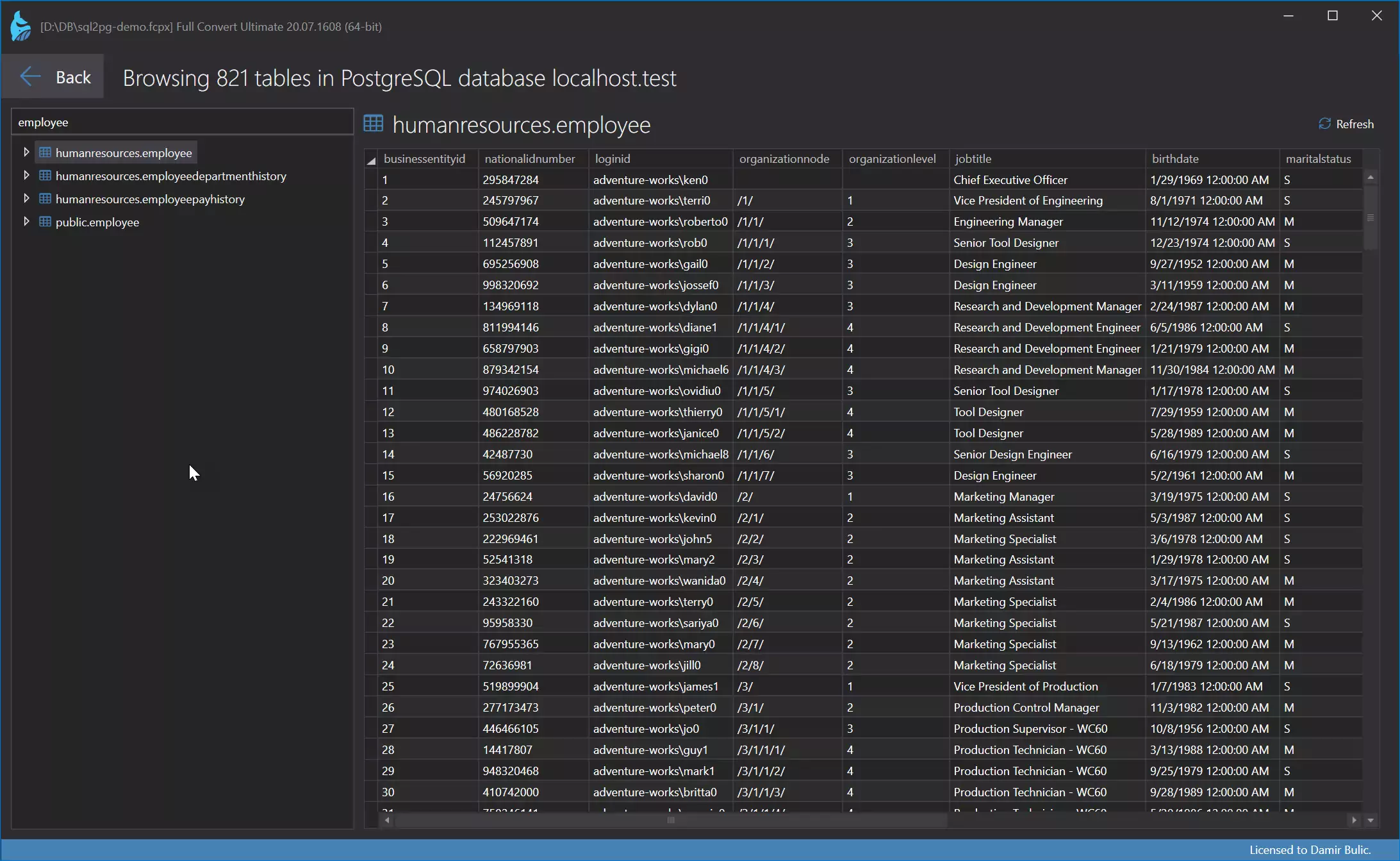
Data is now in the target database
Use our built-in database browser to examine the copied data.
Of course, you can also examine the conversion in detail and see in-depth information for each table.
Migrate your data now.
60-day money back guarantee
Full Convert is used by thousands of organizations in 98 countries.
The OCLC Dewey Cutter Program V1 10.6 is a powerful tool that has revolutionized the process of assigning Dewey Decimal Classification numbers to library materials. By providing accurate and consistent cutter numbers, the program enhances resource discovery, streamlines cataloging workflows, and supports research and scholarship. As libraries continue to evolve and adapt to changing user needs, the OCLC Dewey Cutter Program V1 10.6 remains an essential component of modern library cataloging.
The Dewey Decimal Classification (DDC) system is a widely used bibliographic classification system developed by Melvil Dewey in 1876. It provides a structured and organized way to categorize library materials, including books, journals, and digital resources, based on their subject matter. The DDC system consists of ten main classes, ranging from 000 to 900, each representing a specific subject area.
While the DDC system provides a robust framework for classification, it often requires further subdivision to accommodate the diverse and complex nature of library collections. This is where cutter numbers come into play. Cutter numbers are a set of letters and numbers that are added to the base DDC number to create a more specific and unique call number. The OCLC Dewey Cutter Program V1 10.6 is designed to generate these cutter numbers accurately and efficiently.
The OCLC Dewey Cutter Program is a software application developed by OCLC (Online Computer Library Center), a global library cooperative that provides innovative solutions to support library operations. The program is specifically designed to generate Dewey Cutter numbers, which are used to further subdivide DDC numbers and provide more precise classification of library materials.