A: PCI soft modems were obsolete by 2010, replaced by broadband and USB dial-up sticks. All "new" drivers are modified generics.
If you have searched for , you are likely struggling to make this legacy hardware work on a modern OS. You need the new version of the driver—not the outdated 2002 disc that came in the box. This article provides a complete roadmap to finding, installing, and troubleshooting the latest available drivers for the Advance DT100 modem. What is the Advance DT100 Modem? Before diving into drivers, let's clarify the hardware. The Advance DT100 is a soft modem (also known as a Winmodem). Unlike hardware modems that process data on the card itself, the DT100 relies heavily on your computer’s CPU and software drivers to handle modulation and error correction. driver modem advance dt100 new
A: Reseat the DT100 PCI card. On modern motherboards with PCI slots, the BIOS may disable legacy IRQ routing. Enable "Legacy Plug and Play" or "PCI Latency Timer" set to 64 in BIOS. Conclusion: Is the Advance DT100 Still Worth Using? The driver modem advance dt100 new is a niche tool for enthusiasts, legacy industrial equipment, or building a retro Windows XP gaming rig. With the patched drivers described above, you can achieve stable 56k dial-up on Windows 7 and 10 (32-bit). For modern systems, however, the effort required often outweighs the benefit. But if you need that authentic handshake sound or maintain a fax server, the DT100—with its new driver—remains a surprisingly resilient piece of hardware. A: PCI soft modems were obsolete by 2010,
A: Yes. The new Conexant drivers include a virtual fax COM port. Use Windows Fax and Scan or a third-party tool like Snappy Fax. You need the new version of the driver—not
Introduction In the world of networking hardware, few names evoke the dial-up era quite like the Advance DT100. For years, this internal PCI modem was a staple in desktops across emerging markets, prized for its reliability on V.92 and V.90 protocols. However, as Windows operating systems evolved from XP to 10 and 11, users faced a common nightmare: the infamous "Code 10" or "Code 28" error in Device Manager.


 Synth a tastiera
 Workstation a tastiera
 Pianoforti da palco
 Pianoforti con mobile
 Arranger a tastiera
 Master Keyboard
 Expander
 Campionatori / Groove Box
 Amplificatori per tastiera
 Hammond e organi elettronici
 Organi Classici
 Pedali per tastiere e piano
 Pedali ed effetti per tastiera
 Stand e Supporti
 Custodie per tastiere
 Sgabelli e panchette
 Schede di espansione
 Cavi, adattatori e accessori per tastiere
 Schede audio / Interfacce Midi
 Monitor da studio
 Cuffie da studio
 Microfoni da studio
 Processori / Preamplificatori
 Registratori digitali
 Software e PlugIn
 Master Keyboard e Controller Midi
 Mobili da studio
 Cavi, adattatori e accessori per studio
 Mixer Analogici
 Mixer Digitali
 Casse attive
 Subwoofer
 Sistemi a colonna
 Preamplificatori / Effetti / Equalizzatori
 Microfoni per Live
 Microfoni per telecamera
 Radiomicrofoni
 In-Ear Monitor
 Karaoke
 Strumenti a fiato
 Violini e viole Elettrici
 Luci ed effetti visivi
 Supporti, cavi e accessori per live
 Lettori CD/MP3 per DJ
 Console / Controller
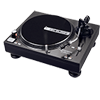 Giradischi e Testine per DJ
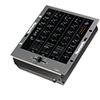 Mixer per DJ
 Software DJ
 Effetti per DJ e Groove Box
 Cuffie per DJ
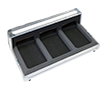 Custodie e Flight case
 Cavi, adattatori e accessori per DJ
 Batterie elettroniche
 Batterie acustiche
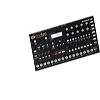 Drum machine
 Accessori per batterie
 Microfoni per batteria