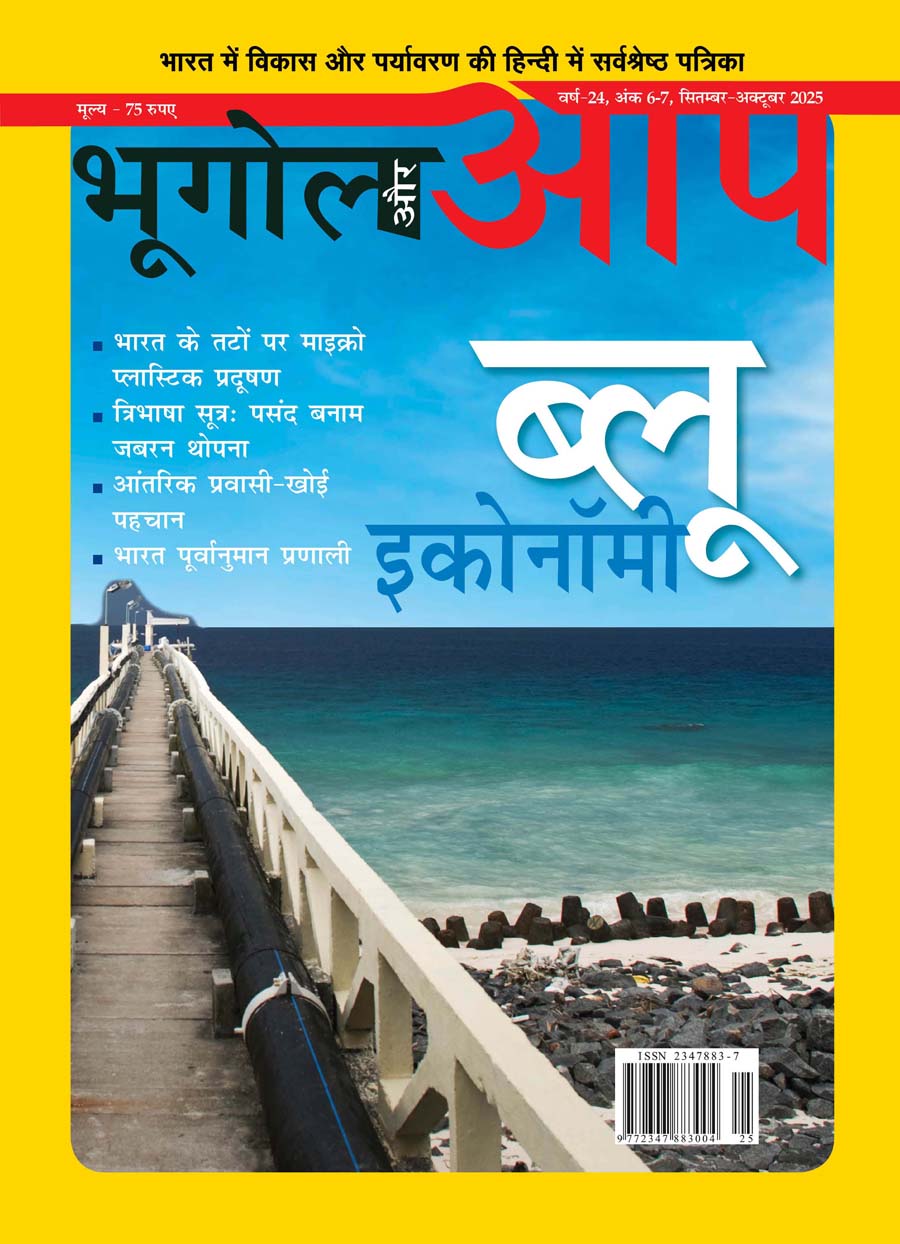
Population Density in terms of Geography in I...
The most common sort among the calculations of population density is as defined by the number of persons per square kilometre. Calculations of population density depict...
US Climate-No Cause for A...
‘I don’t believe it’, was US President Donald Trump’ response to the ‘the National Climate Assessment’, in which clim...
Wind Types | Why They are...
Ascertaining wind types is important to understand disas... deewane huye paagal af somali
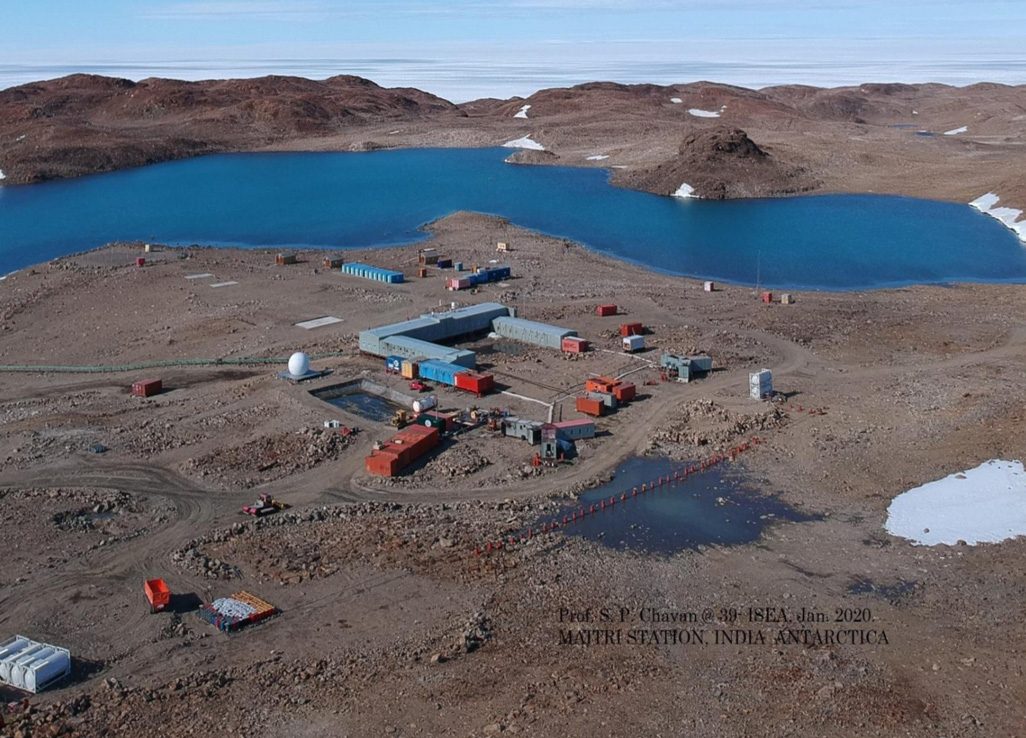
India is set to embark on a new chapter in its Polar exploration journey with the construction of Maitri II. The Indian government plans to establish a new research station near the existing Maitri base, located in the Schirmacher Oasis region of East Antarctica, which was commissioned in 1989. The completion of the research station would be India's fourth r...
The Deep Ocean Mission (DOM), approved by the Government of India in 2021 under the Ministry of Earth Sciences (MoES), represents a strategic step in realizing Sustainable Development Goal 14 (SDG 14: Life Below Water)1 and advancing the national vision of Viksit Bharat 2047. In this episode of GnY Live, we participate in a discussion with Dr. M. Ravichandra...
China recently announced restrictions on the export of seven rare earth elements (REEs), soon after US President Donald Trump decided to impose tariffs. As the world's dominant supplier—responsible for over 85 to 90 per cent of rare earth processing (Jayadevan, 2025)—this decision has raised alarms across the tech, defence, and energy sectors worldwide. Bu...

It proves that a great melody—especially one about the universal, maddening nature of love and joy—has no final language. Whether you are a Deewana (lover) or a Qallato (crazy one), the beat belongs to you.
The song’s driving beat, the fusion of electronic synth with classical dholaks, and its high-energy crescendo make it a dance-floor filler. However, for a Somali ear, there is something deeper. The melancholic undertone hidden beneath the upbeat rhythm mirrors the Somali love for Qaraami (classical, often tragic love songs) and Hees (traditional poetry set to music). Somalis have a long, rich history with Bollywood. During the 1970s and 1980s, Indian films were regularly shown at the Shaqaalaha (workers’) cinemas in Mogadishu. While many older Somalis remember the songs of Amar Akbar Anthony or Sholay , the 2000s generation—especially the diaspora in Kenya, the UK, the US, and the Gulf states—rediscovered Bollywood via MTV and early YouTube.
arrived at the perfect time. Around 2005–2010, Somali musicians were experimenting with fusion. The common thread? The song's chorus—"Deewane huye paagal, mastaane huye paagal"—has a phonetic flow that feels surprisingly natural when transliterated into Somali pronunciation. The Birth of the "Af Somali" Version The exact origin of the "deewane huye paagal af somali" version is shrouded in internet mystery. It likely began as a fan project in a home studio in Columbus, Ohio, or Hargeisa, Somaliland. A young producer isolated the instrumental track and hired a local singer to replace the Hindi lyrics with Somali lyrics that fit the same rhythm.
(We are crazy now). Play it again. Did we miss your favorite version of Deewane Huye Paagal in Somali? Let us know in the comments below.
If you have searched for the keyword , you are part of a fascinating cultural crossover. You may have heard a remix, a cover, or a fan-made lyric video where the iconic Bollywood tune is sung in the melodic, rhythmic tones of the Somali language. This article dives deep into why this specific song has captured the imagination of Somali listeners, the story behind the original track, and how it became an underground anthem from Mogadishu to Minneapolis. The Original: A Bollywood Classic First, let's revisit the original. "Deewane Huye Paagal" (translating to "We have become crazy, mad") was composed by the legendary duo Kalyanji-Anandji (supervised by their son Viju Shah) and sung by the powerhouse voices of Kunal Ganjawala and Adnan Sami . The lyrics, penned by Sameer, describe the intoxication of love—a state so powerful that it turns lovers insane.
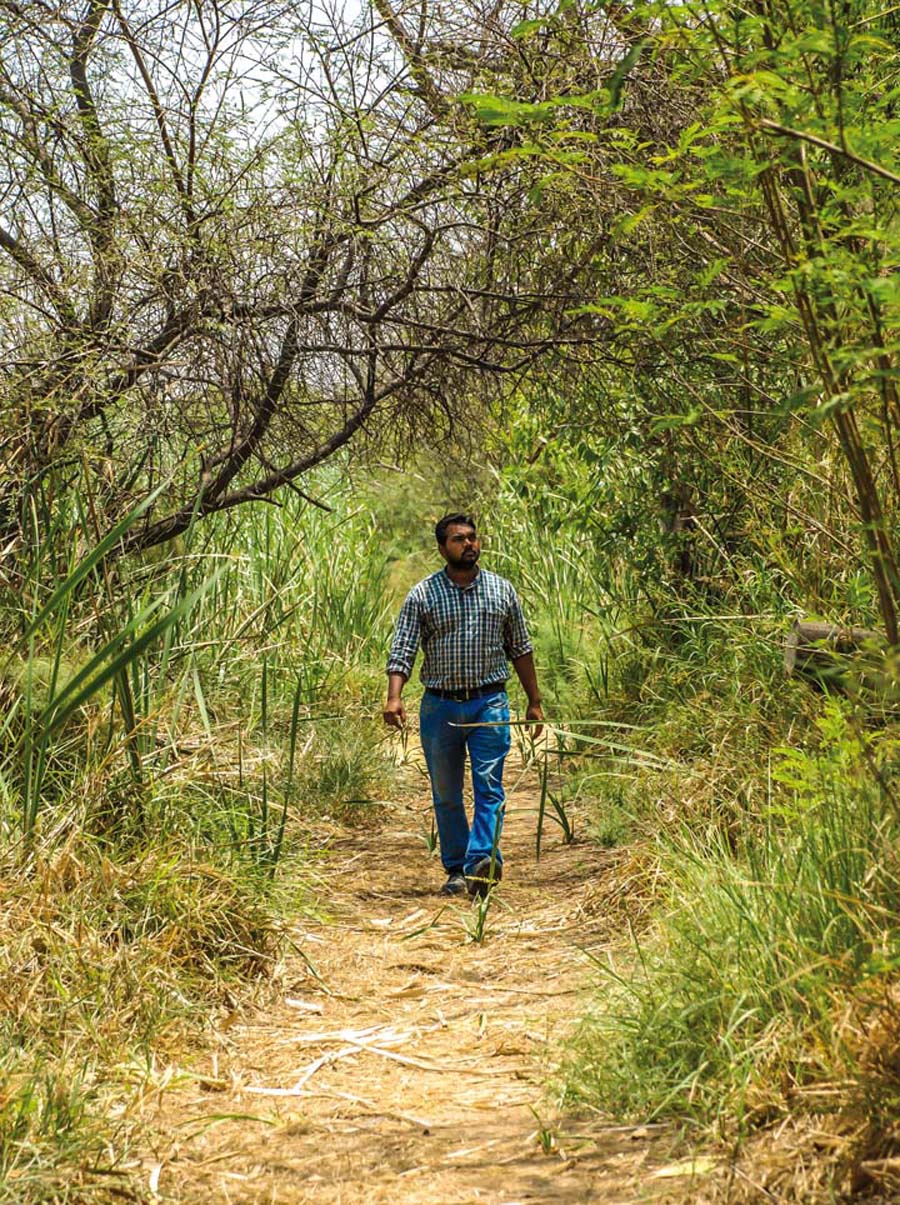
Located in the Dehradun district, the Asan Conservation Reserve is the 38th Ramsar site in India and first in the state of Uttarakhand. It is a human-made wetland, which has resulted due to the Asan B..
A new paper by British climate writer, Paul Homewood says that average temperature rise in the USA is not alarming. Based on the data received from the NOAA, it claims that there has been little or no...
The risk of climate change is universal but the poor are more vulnerable with worsening food security and exacerbating hunger in developing countries. Climate change is also likely to affect species distribution and increase the threat of extinction and loss of biodiversity. ..
1° Hotter = 1000 Dead: Heat Waves as India’s Growi...
Heatwaves are no longer episodic extremes but are increasingly becoming a structural...
Sale! Sale! Sale!: Private Education
As India stands at a critical juncture in education reform, questions surrounding pri...
Vanishing Grants: The Fate of Higher Education in...
The foundational principle upon which our education system rests is fundamentally bas...
Ailing Glaciers: Aerosol Warming the Himalayas-Ins...
The Himalayan glaciers face significant climate change and air pollution threats. In...
It proves that a great melody—especially one about the universal, maddening nature of love and joy—has no final language. Whether you are a Deewana (lover) or a Qallato (crazy one), the beat belongs to you.
The song’s driving beat, the fusion of electronic synth with classical dholaks, and its high-energy crescendo make it a dance-floor filler. However, for a Somali ear, there is something deeper. The melancholic undertone hidden beneath the upbeat rhythm mirrors the Somali love for Qaraami (classical, often tragic love songs) and Hees (traditional poetry set to music). Somalis have a long, rich history with Bollywood. During the 1970s and 1980s, Indian films were regularly shown at the Shaqaalaha (workers’) cinemas in Mogadishu. While many older Somalis remember the songs of Amar Akbar Anthony or Sholay , the 2000s generation—especially the diaspora in Kenya, the UK, the US, and the Gulf states—rediscovered Bollywood via MTV and early YouTube.
arrived at the perfect time. Around 2005–2010, Somali musicians were experimenting with fusion. The common thread? The song's chorus—"Deewane huye paagal, mastaane huye paagal"—has a phonetic flow that feels surprisingly natural when transliterated into Somali pronunciation. The Birth of the "Af Somali" Version The exact origin of the "deewane huye paagal af somali" version is shrouded in internet mystery. It likely began as a fan project in a home studio in Columbus, Ohio, or Hargeisa, Somaliland. A young producer isolated the instrumental track and hired a local singer to replace the Hindi lyrics with Somali lyrics that fit the same rhythm.
(We are crazy now). Play it again. Did we miss your favorite version of Deewane Huye Paagal in Somali? Let us know in the comments below.
If you have searched for the keyword , you are part of a fascinating cultural crossover. You may have heard a remix, a cover, or a fan-made lyric video where the iconic Bollywood tune is sung in the melodic, rhythmic tones of the Somali language. This article dives deep into why this specific song has captured the imagination of Somali listeners, the story behind the original track, and how it became an underground anthem from Mogadishu to Minneapolis. The Original: A Bollywood Classic First, let's revisit the original. "Deewane Huye Paagal" (translating to "We have become crazy, mad") was composed by the legendary duo Kalyanji-Anandji (supervised by their son Viju Shah) and sung by the powerhouse voices of Kunal Ganjawala and Adnan Sami . The lyrics, penned by Sameer, describe the intoxication of love—a state so powerful that it turns lovers insane.